Scooter Inverter
Objective
Constraint AwarenessBackground
The Scooter Inverter was engineered to provide high-performance portable power for everyday appliances. The project successfully navigated the complex trade-offs between technical efficiency, manufacturing affordability, and modern industrial design.
- Have high-power battery capable of charging most appliances
- Maintain portabilty
- Adequate Safety Features
- Spend less than $60
- Employ electrical concepts
Key Design Decisions
Engineering Methodology Cost Awareness Performance Tradeoff CircuitsBuck Converter Selection
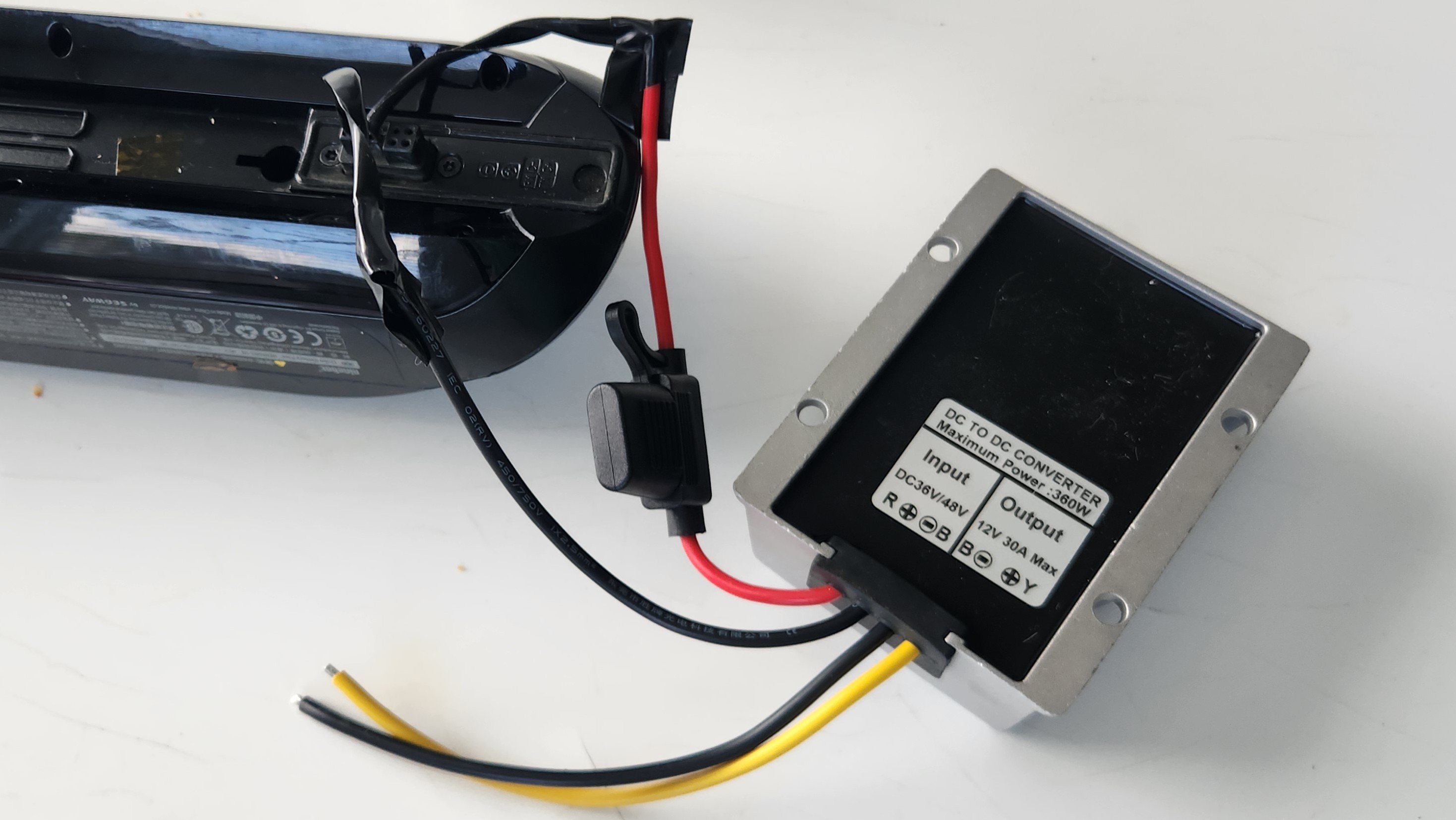
A buck converter was used to efficiently step down the scooter battery voltage to the inverter’s operating range. Due to unknown battery output specifications, a 360 W inverter was intentionally oversized to ensure sufficient power for expected loads without overloading the converter.
Inverter Selection
A 300 W inverter was selected to meet the power requirements of the intended load while maintaining a reasonable size and weight. The cigarette plug provides a convenient connection for the inverter to the scooter's power system.
Other Materials
A 30 A switch was soldered to the buck converter as a safety kill switch to disconnect the power in case of an emergency. It also ensures the buck is not constantly powered on when the inverter is not in use.
30 A blade fuses were installed to protect the circuit from overcurrent conditions.
The case was 3D printed for cost effectiveness and to allow for quick prototyping and iteration.
Results
Experimental ValidationExtensive testing was conducted to validate the performance and safety of the scooter. This included bench testing of individual components and system-level testing to ensure all parts functioned as expected under typical usage scenarios.
The stress test results are as follows:
- 17 A current draw for 1 minute before BMS trips overheat battery protection
- 8 A of current draw for prolonged operation
- Efficiency: ~85%
Conclusion: The scooter inverter performs well under typical usage scenarios, with a high efficiency and adequate safety features.
- 200 W maximum power
- 100 W continuous power
- 110 V (AC) maximum voltage
These results demonstrate the scooter's ability to deliver consistent power while maintaining safety and efficiency.